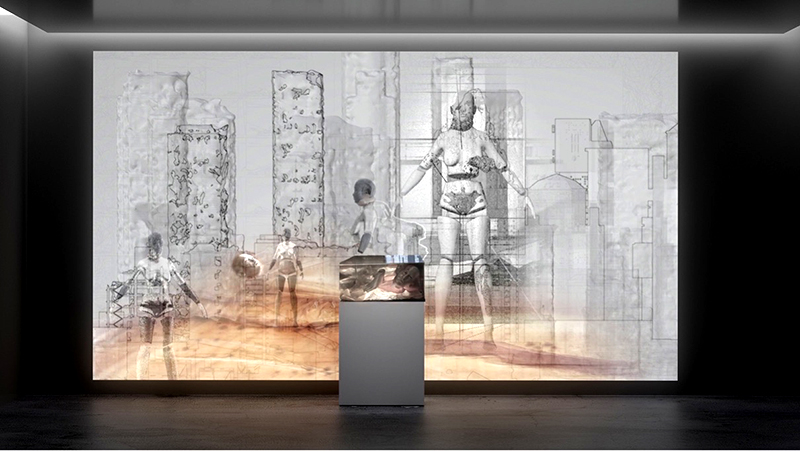
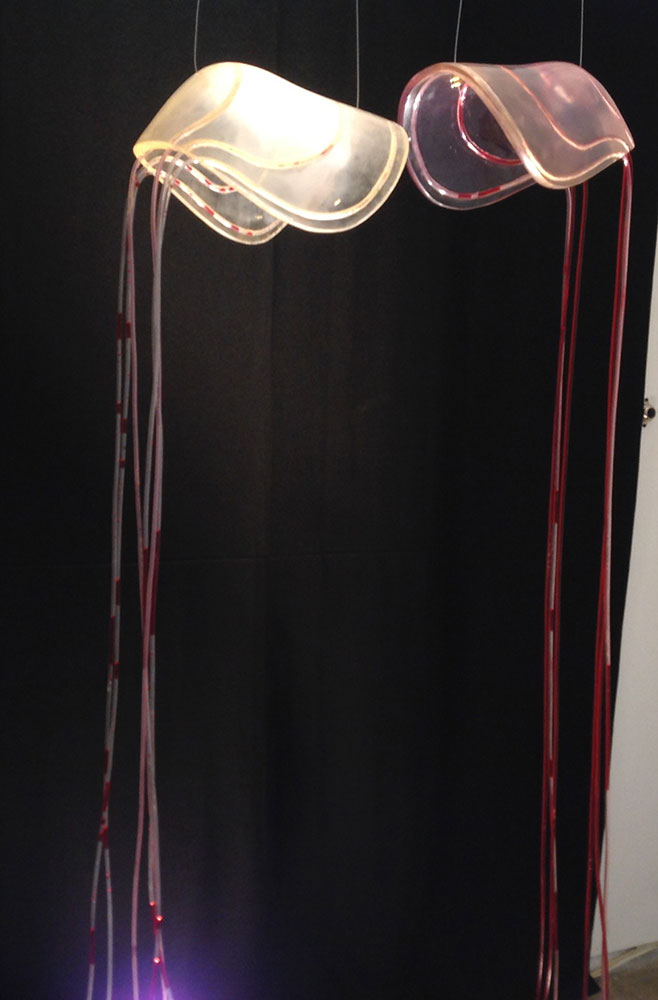
2024. This work participates In the 2025 edition of New York Latin American Art Triennial.
Memories of the Future.
Memories of the Future.

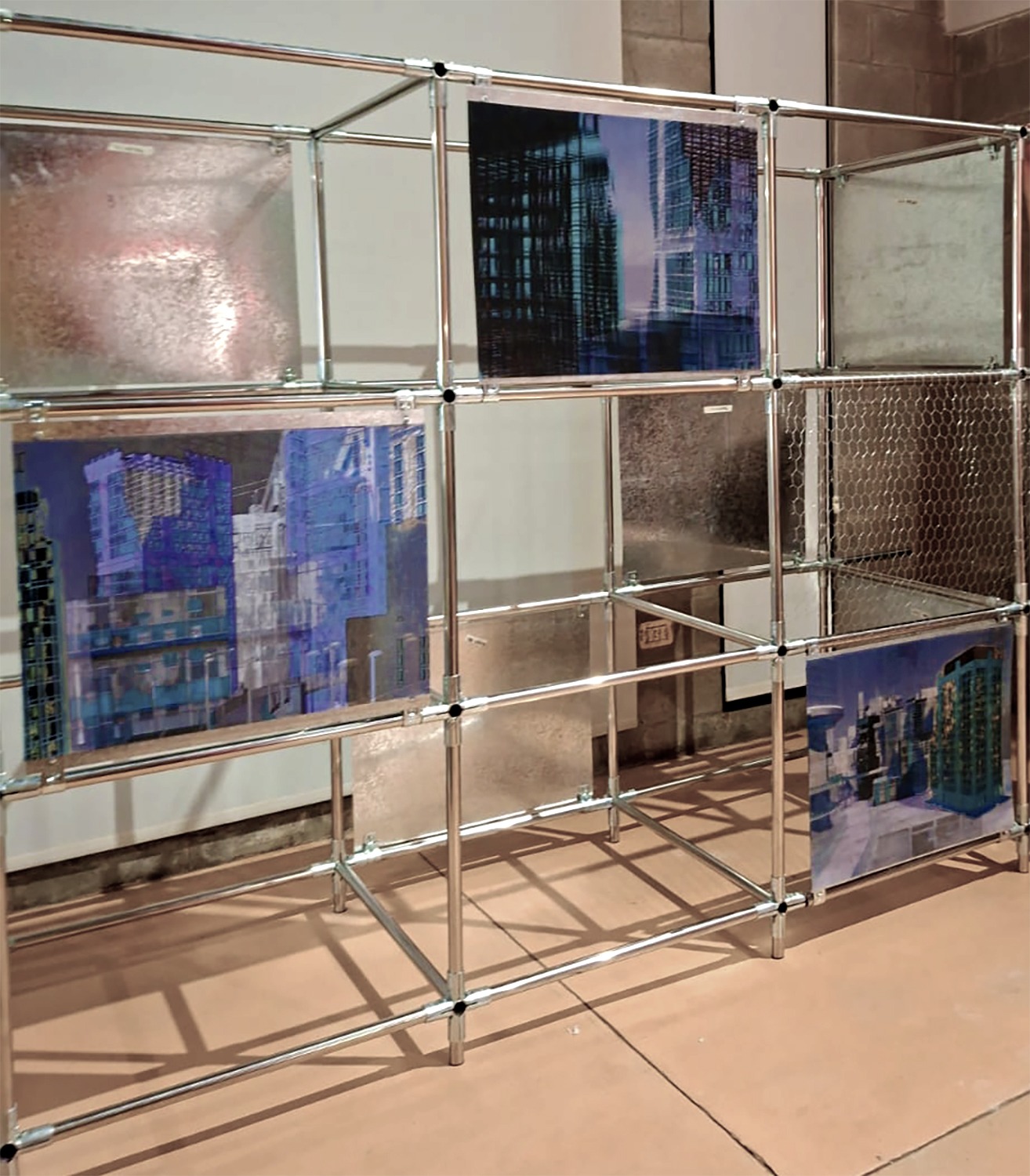
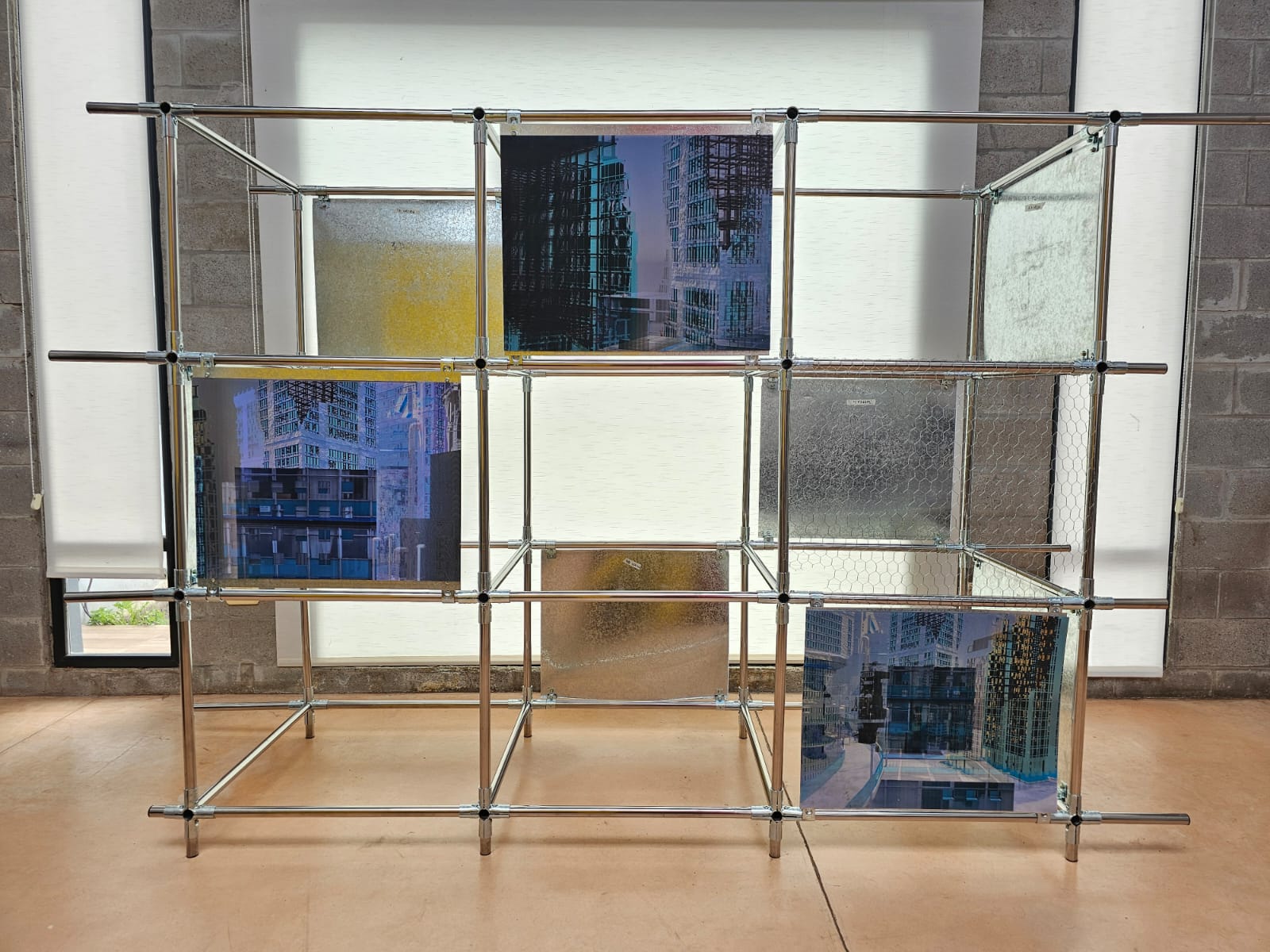
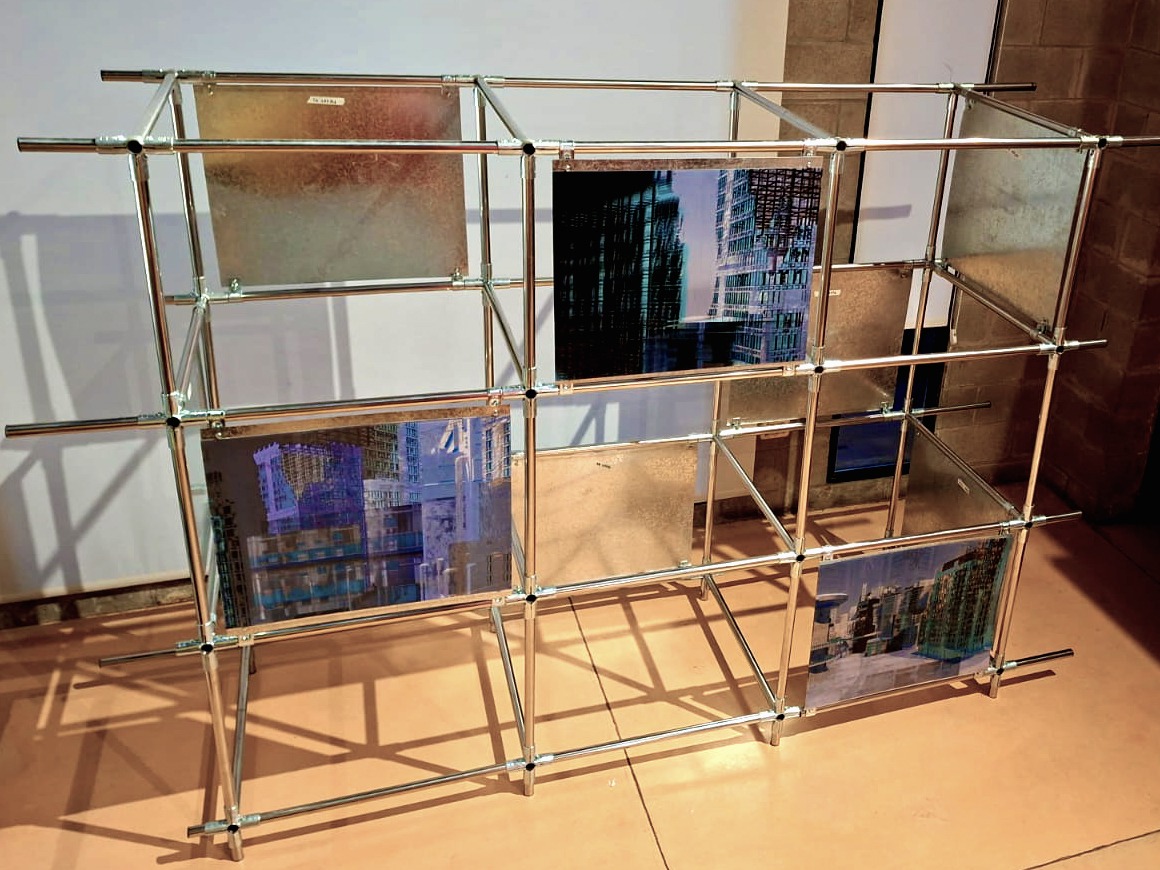
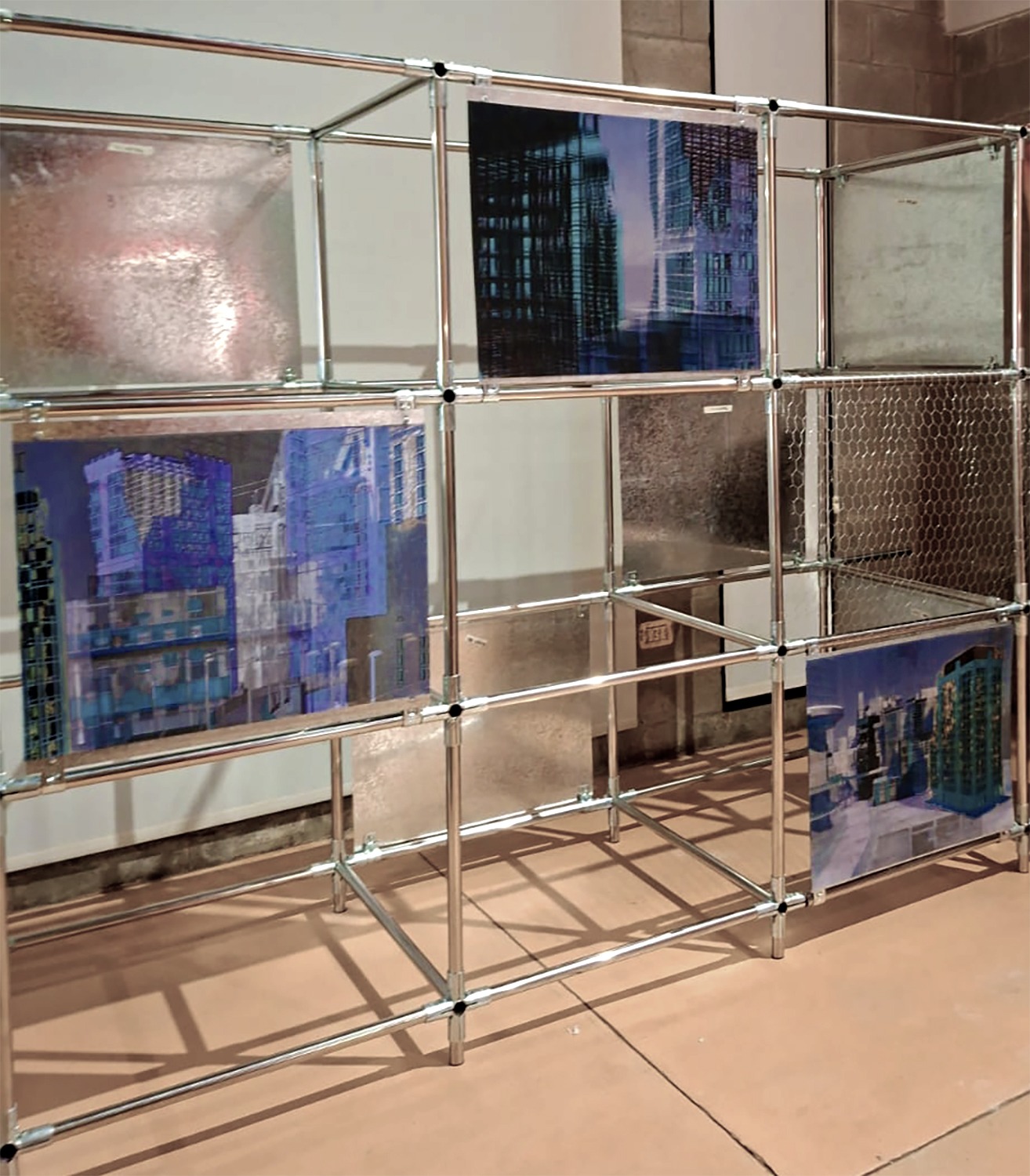
2024. This work participates In the 2025 edition of New York Latin American Art Triennial.
The central concepts of my practice have been both, individual and collective memory. This key concerns in my practice led me to unearth images and symbols from the past combining them in contemporary terms.

The Impact of Technology
Recently, my work has been characterized by the incorporation of new technologies that reshape notions of humanity and identity through technological intermediation, challenging contradictions between natural and artificial worlds. The conceptual framework of my work is posthumanism, specifically the one which dissolves the boundaries between natural and artificial worlds, bodies and territories.

Posthumanism and Architecture
In this posthuman context, which creates a break into architectonic spatiality and questions notions of time and space, urban spaces play a key role in creating dystopian worlds, full of oppressive scenarios that reflect loss of humanity. Thus, architectural spaces as well as cities, become fragmented. Architecture becomes  a tool to strengthen a collective identity and, consequently, the bond between the city and its inhabitants.

I ask myself about the human vestiges in these dystopian cities and so on the possibility of recovering territorial memory since temporality and spatiality can not be discerned. Past, present and future are merged and overlapped so, spaces are not linear anymore but mediated by screens. Hence, territorial memory is constantly relocated.

Memories of the Future
As regards the choice for the title, it was the answer to this constant question: Is it possible to have memories of something that has not occurred yet?

In times where everything is fragmented and when it is impossible to locate memories in time and place due to screen intermediations, past, present and future are flattened, So, memories are not traced to the past, but they could be future imagined memories or future recollections.

If our intention as artists is to create new narratives and to create new possible worlds, it would be necessary to build memories of the future. I ask myself where the traces of the human remain in these dystopian cities are/reside. Hybridity is what defines these interstitial “in-between” spaces—neither physical nor virtual, neither past nor future.

My work
As an artist my purpose is reimagining new worlds to be inhabited in the near future. To achieve this, I have made use of new visual strategies arising from various perspectives of the city, enabling visitors to view the city from within, from above, and from the inside out.

In this project, images overlap, Hence the choice of lenticular prints, which create shifting architectures—onto a present that contains both past and future. So, territorial memory is in constant rebuilding and relocation. This work imagines a multilayered digitally-born reality that enables a critical potential to inhabit other worlds.

My aim is to articulate the fictional and the real, the human and the post-human, re-signifying the signs of architectural space and re-situating its memory by making it our own. The goal is to give rise to shifting spaces that change according to the viewer’s perspective, reconstructing a new narrative: one built from fragments and from the post-human